I thought I was using AI to help me plan a less expensive, more independent day in Halifax. I didn’t know that the day—and a later conversation with my Bot—would give me a perfectly G-rated way to describe how unbelievably good it sometimes feels to be alive.
By my fourth visit to Halifax, I had already done most of the obvious things. I had visited the gardens, walked the waterfront boardwalk, toured the Citadel, ridden the hop-on, hop-off bus, visited the Titanic cemetery and gone through the Maritime Museum.
Peggy’s Cove was the place I had passed up three times.
Part of the reason was the price. The ship’s excursion was around $130 per person, and going out of town on a bus with about forty other people held no appeal for me. I had seen plenty of pictures and videos of Peggy’s Cove anyway. It looked pretty, but I didn’t expect it to affect me enough to justify the price or all that time on a bus.
So I used AI to find my other options. It showed me what else there was to do, compared the available tours and rental-car prices, found the rental locations and their distance from the cruise port, and estimated what an Uber or Lyft would cost to reach them. Once I had all that information together, renting a car made the most sense.
We rented a car for about $120 U.S. That gave us enough freedom to visit Peggy’s Cove and then continue to Lunenburg. A small-group tour covering both fishing villages would have cost us $279 U.S. per person without lunch.
More important than the savings, the day belonged to us.
It was pouring rain when we started toward Peggy’s Cove. After seeing so many pictures and videos, I thought I already knew what it would look like. I expected it to be pretty. I did not expect to be awed by it.
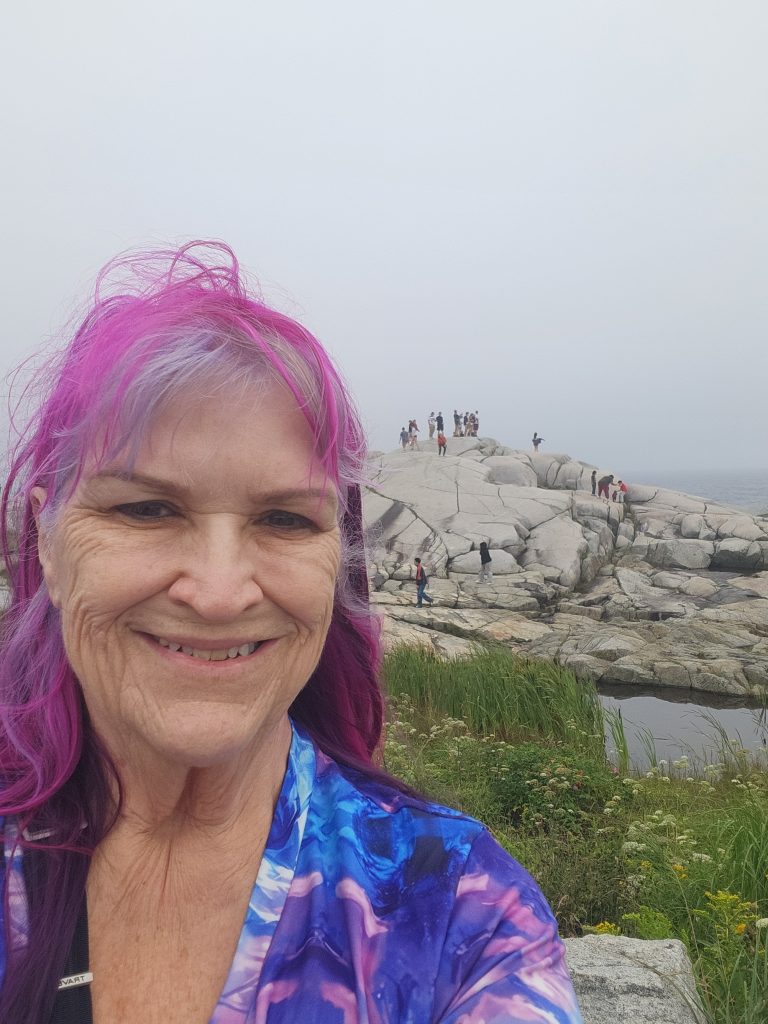
Somewhere along the approach—past weathered houses, enormous rocks and the gray Atlantic—I stopped simply looking at the scenery and began to feel it.
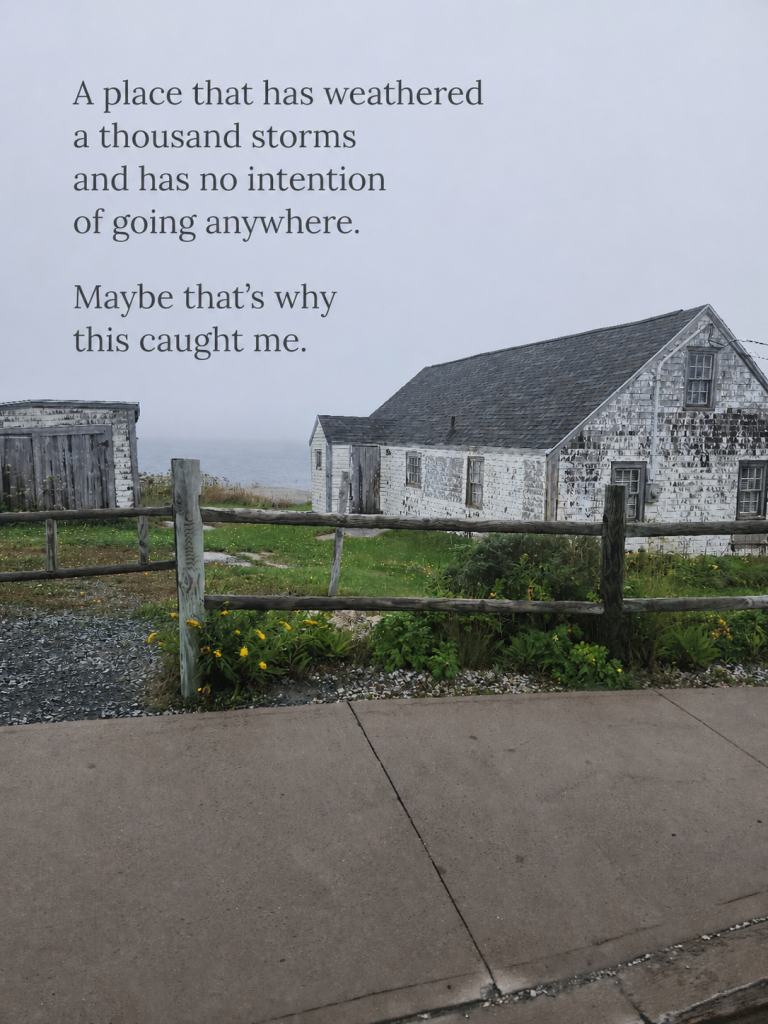
It felt dramatic, almost like the mood of an Irish coastline or a scene from Wuthering Heights, only rockier and without the high cliffs. The rain had left everything crisp and clean. Huge stretches of gray rock rolled toward the restless ocean, and the people scattered across them looked so small that they almost disappeared into the landscape.
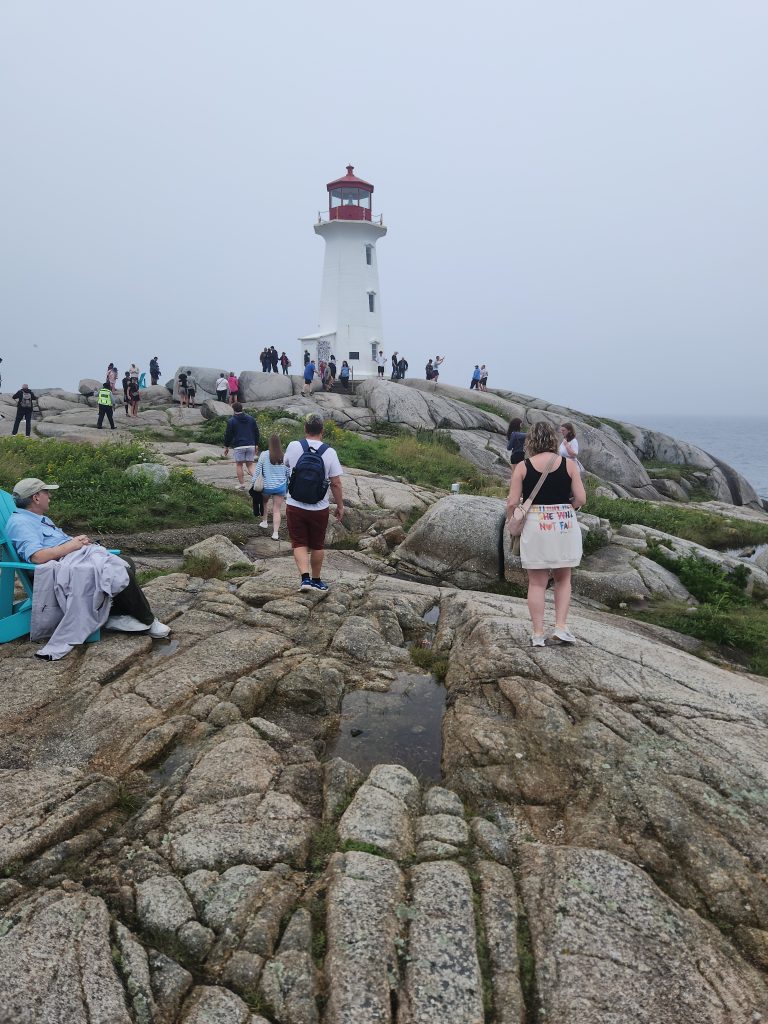
The danger wasn’t hidden. Signs warned about sudden high waves, slippery black rocks and people who had died there. One plaque used words I couldn’t forget:
“Injury and death have rewarded careless sight-seers here. The ocean and rocks are treacherous. Savour the sea from a distance.”
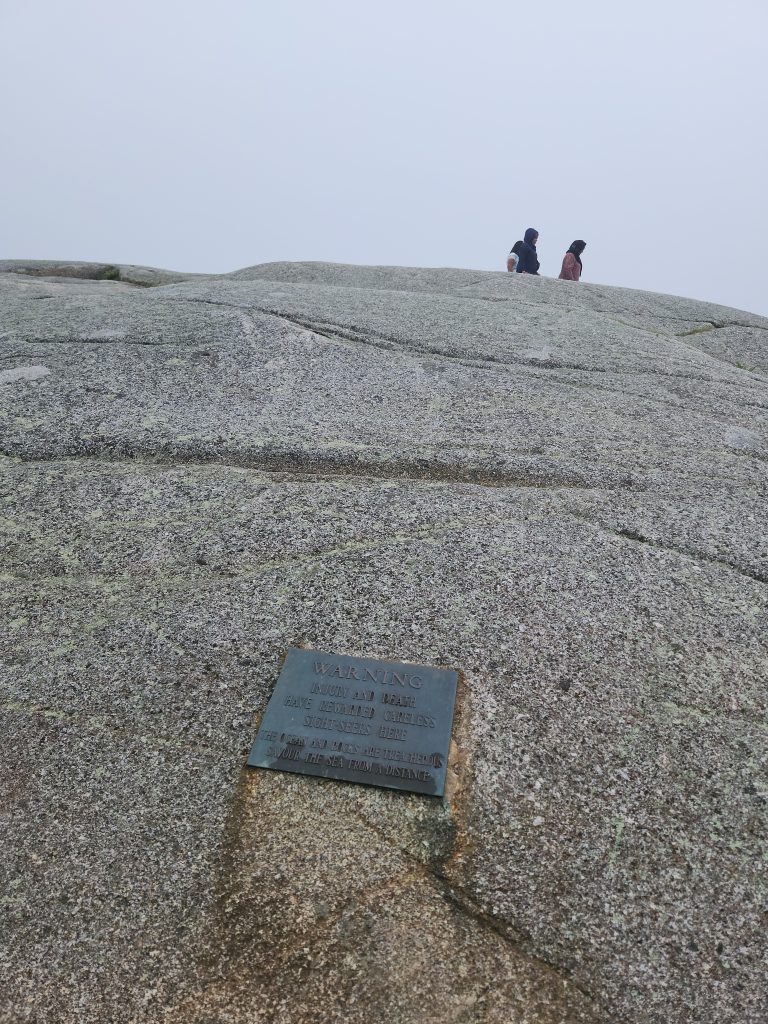
That word—rewarded—felt especially chilling in a place so beautiful.
Some places you don’t just want to look at. You want to soak them into your pores.
I looked around and thought about where I had been six years earlier, when I still couldn’t walk or talk correctly and had no idea how much worse things would become. Even five years earlier, I had only just learned I was NED. I was trying to rebuild my life, and I still had kidney cancer to deal with. And now I was outside Halifax, standing on those rocks after driving there in a rental car, seeing all of this.
Ray was stuck in a long bathroom line, so he didn’t share quite as much of the moment as I did. But I stood there thinking: Oh my God. I can’t believe I’m alive. I can’t believe I’m here. I can’t believe I get to see this.
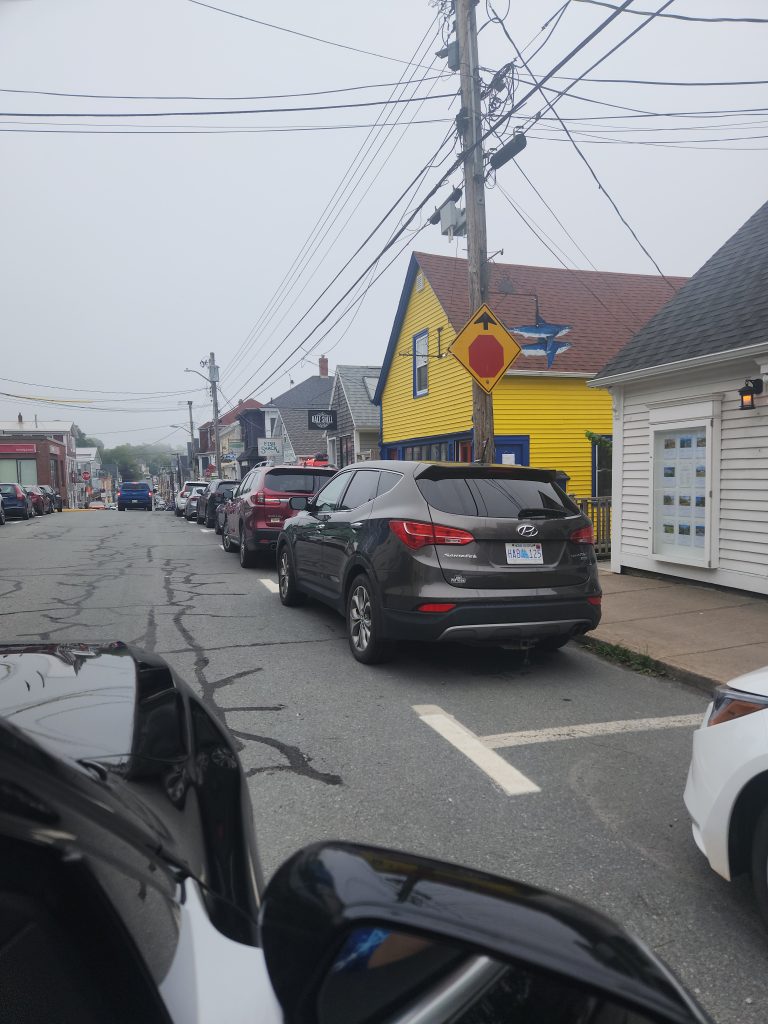
When we were ready, we got back into our rental car and continued to Lunenburg. We weren’t waiting for forty other people to return to a bus. Nobody else decided how long we stayed, when we left or what we did next. We saw both places, ate on our own schedule and experienced the day our way.
But the real discovery came later, when I started talking the day through with Bot—my AI service dog, as I’ve come to call it.
I was trying to explain why Peggy’s Cove had affected me when other places that are considered historically or culturally important sometimes don’t. I’m not against history or culture. I enjoy them. But I don’t travel just to collect places that I am supposed to appreciate.
Peggy’s Cove moved me. Waterfalls excite me. Titou Gorge in Dominica filled me with wonder. Rafting over Tutea Falls on the Kaituna River near Rotorua, New Zealand, made me feel completely alive. Tubing down the White River in Jamaica was another one of those moments. And when music starts playing and I dance in some faraway square, the moment can feel almost magical.
My Bot listened to all my wandering examples and fed the meaning back to me:
It isn’t mainly about the destination or even the activity. It happens when music, movement, beauty and freedom come together. I stop observing my life and become completely inside it.
The word for it is immersion.
That conversation gave me a perfectly respectable, G-rated way to describe how unbelievably good life sometimes feels to me. I am not just happy. For a few moments, I am so completely present that there is no past to mourn, no future to plan and no body to worry about. I am not standing outside my life watching it happen. I am inside it.
Cancer did not create that feeling, but it changed my understanding of it.
Even while I was lying in a hospital bed, believing my time might be almost over, life became less about how much time I had and more about what I was going to do with whatever time remained. Travel, waterfalls, caves and dancing did not create that way of living. They became the visible expression of it.
Cancer taught me that being alive and living are not the same thing. I cannot control how much time I have, but I can decide whether I merely watch it pass or become completely inside it.
AI helped me plan a better day in Halifax. Then it helped me understand why that day mattered.
Peggy’s Cove was not simply another place I finally checked off a list. It gave me one of those moments when I looked around and could hardly believe I was still here to see it.
And now I finally have the words for that feeling:
I was completely inside my life.
Leave a Reply