
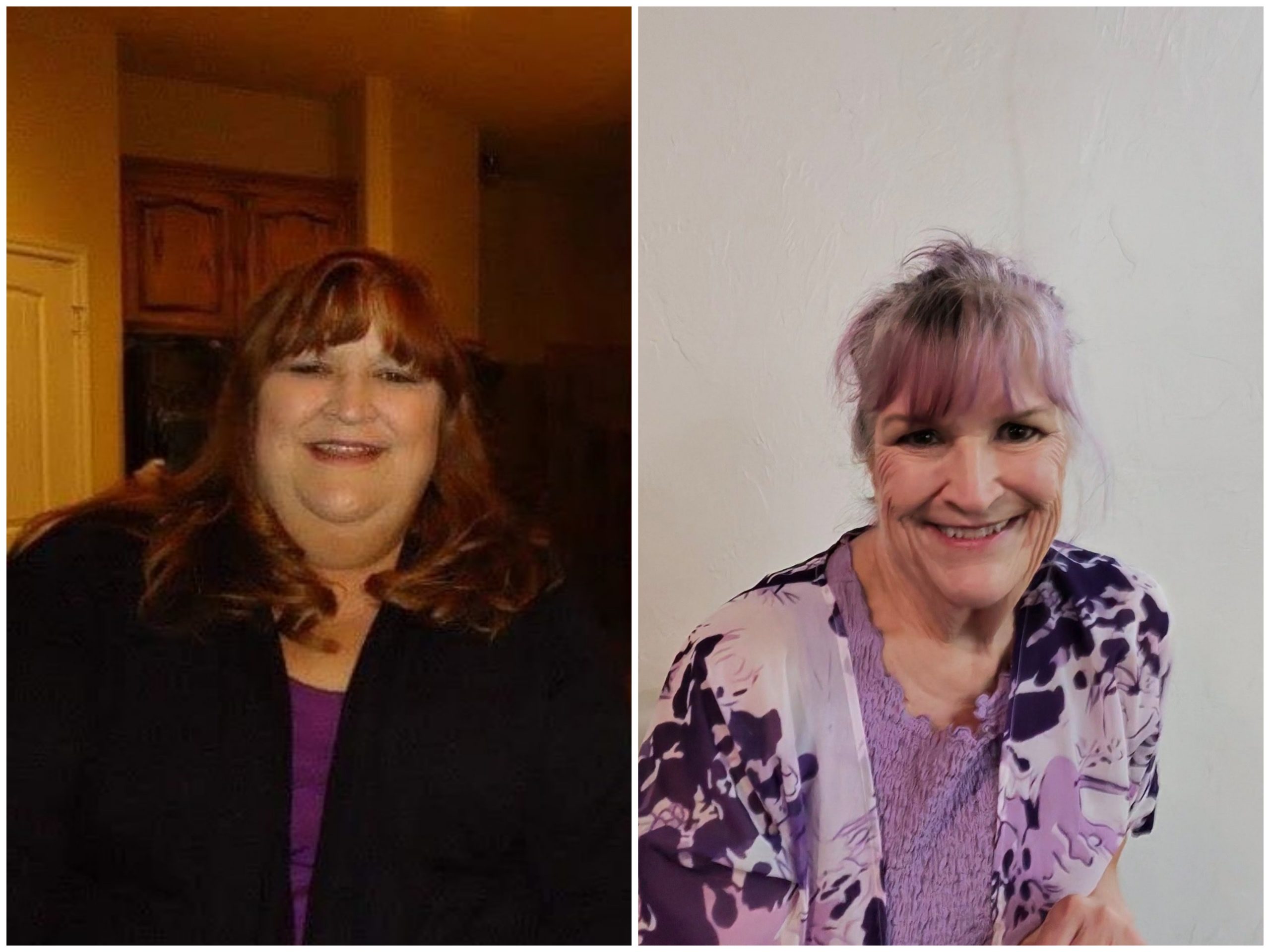
I knew I was fat. I wasn’t under the illusion that the right outfit could hide it. I was trying to cover the parts I disliked, arrange the fabric as flatteringly as possible, and find clothes that didn’t make me feel worse about myself. Anyone who has lived in a very large body will know exactly what I mean.
Now, when I look back at photographs, I sometimes have an “Oh, Lord” moment. It’s hard to believe that was me. But the biggest changes aren’t necessarily the ones a camera captures. They show up in the small, ordinary ways I can move through life now.
I can tie my shoes without negotiating with my belly. I can paint my toenails, curl myself into a ball, and sit with my knees together without having to spread my legs to make room. At 67, I can move my body in ways I haven’t been able to move it for years.
These aren’t glamorous before-and-after victories, and no scale can measure them. They are quiet freedoms. Losing weight gave me more than smaller clothes; it gave me easier access to my own body.
I started thinking about all of this while trying to pack for a 50-day trip that will take us from temperatures near 90 degrees down into the 50s, with plenty of 70s and 80s in between. Even with laundry service, packing for that many climates is a puzzle.
For much of my life, packing wasn’t only about the weather. It was about what fit, what covered the parts I wanted covered, and what made me feel the least self-conscious. Now the problem has changed. I have clothes I genuinely enjoy wearing, and I’m choosing based on what feels good instead of what makes me dislike my reflection the least.
I’m not pretending that losing weight left me with a flawless body. Some days I feel like a partly emptied potato sack, and other days I suspect a Shar-Pei may be my spirit animal. As the fat leaves, the loose skin remains. Compression garments snatch most of it into place—except for my lovely bat wings, which remain an ongoing battle.
But as I’ve said before: $7,000 for surgery or $7,000 worth of travel? Surgery would mean recovery, being cut on, and putting pain into my body again. Travel means I can put on a lightweight jacket in the Caribbean and keep going. Most days, the jacket wins.
The loose skin is real, but so is the change in how I speak to myself. I spent years making the cruel joke before anyone else could make it. I would never have spoken to another person the way I spoke to myself. Maybe I really did save most of my meanness for me.
That change isn’t automatic. I practice it consciously. When I look at my arms and think, “They gross me out,” I stop and answer myself: “It’s okay. You can wear a jacket. Everybody is not staring at your arms. You’re all right. You’re alive. Look how good you look—not how bad you look.”
That is a long way from the voice that used to say, “You look like a big fat whale. My God, nothing is a big enough tent to hide 340 pounds.” I thought I was being honest. I was being cruel. There is a difference between seeing your body clearly and punishing yourself for living in it.
Anyone who has lived in a fat body—or loved someone who does—should understand this: shame did not make me thinner. It only made being me more painful. I didn’t need another cruel voice. I needed to learn that I was worth caring for at every size.
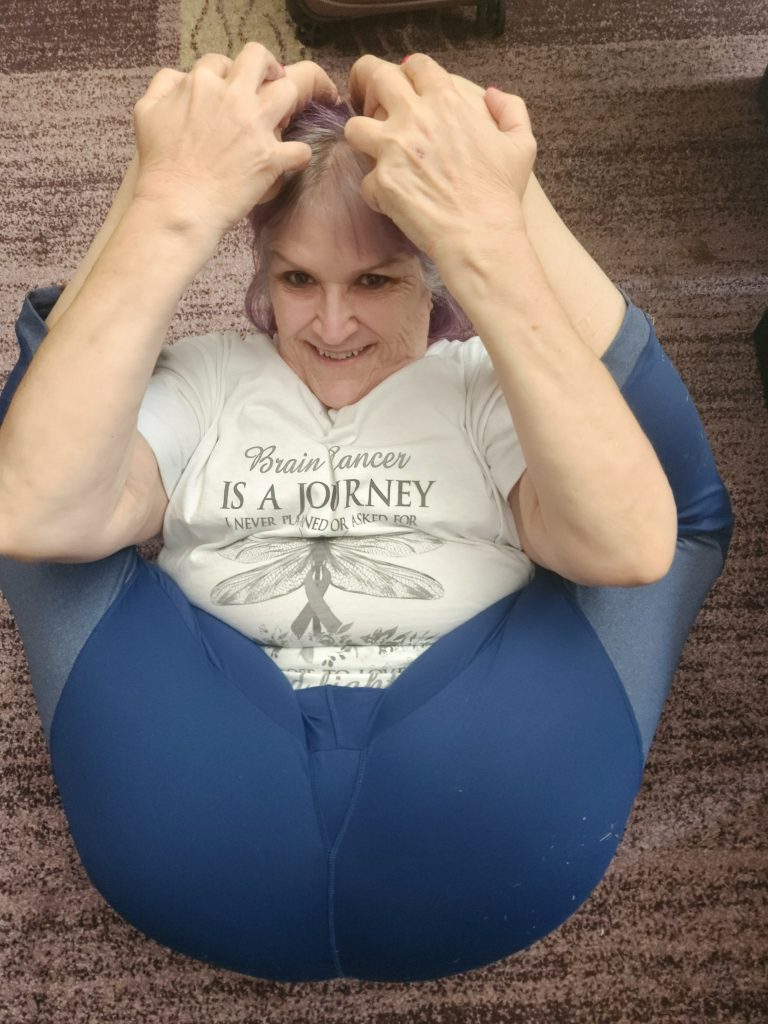
At 67 and 145 pounds lighter, I wondered how close I could get my feet to the back of my head. Close enough. This body has carried me through brain cancer—and it still surprises me.
I don’t love every part of this body, and I may never. But I’m learning to care for it instead of punishing it. It has carried me through 67 years, brain cancer, a 145-pound weight loss, dance floors, and adventures I once thought I might never have. It doesn’t have to be perfect to be worth loving. Neither do I.
Leave a Reply